







The cost of war is spreading from factory floors to ordinary people’s bills.
On the morning of April 8. the month-long "US-Israel-Iran war" seemed to have reached a turning point. The United States and Iran announced a two-week ceasefire and a return to negotiations, and the Strait of Hormuz – which controls the world’s oil lifeline – was also set to reopen.
Early that morning, Zhang Jue, a plastic products manufacturer, saw the news on his phone. He immediately forwarded it to his polypropylene (PP) raw material supplier, hoping to confirm the day’s latest PP prices.
The supplier was noncommittal, replying: “Let’s wait and see.”
Zhang Jue had been waiting for this news for a long time. Along the industrial chain of “crude oil – naphtha – ethylene/propylene – plastics,” the price of a ton of polypropylene had soared from just over 6.000 yuan to over 10.000 yuan starting the day after the war broke out. Every day, staring at the prices marked in red, Zhang felt like “a leek being mercilessly harvested.”
The past month had been excruciating for small and medium-sized manufacturers in the midstream. International oil prices briefly hit $144.42 per barrel, the highest level since 2008. As the source of basic energy and chemical feedstocks, the surge in crude oil prices quickly drove up prices of basic chemical materials such as polyethylene and polypropylene. According to BOC International, as of last week (March 30 to April 5), 65 of the 100 chemical products it tracked had risen in price; on a monthly basis, 84% of products saw month-on-month price increases.
The raw material price hikes surged down the industrial chain, silently seeping into ordinary people’s lives – from shower gel to takeout containers, from socks to delivery drivers’ fuel tanks.
For countless Chinese manufacturing business owners like Zhang Jue, this had been a month of being held hostage by crude oil prices and geopolitics. They could neither control resources like upstream players nor wield pricing power like downstream brands. Stuck in the middle, they could only passively bear the volatility.
Zhang Jue waited all day. By evening, he saw the supplier’s quote – a 7% drop. “Prices go up instantly, but come down slowly,” he said with resignation. The factory’s material stock was almost exhausted, but he didn’t place new orders. “I’ll wait a couple more days. Prices should fall further. Anyway, I’m not being the leek this time.”
Unexpectedly, on the morning of April 9. the news came that the Strait of Hormuz had been closed again. Zhang Jue sent a helpless emoji. Faced with the unpredictability of international affairs, there was little more he could do but continue waiting.
The “on-off switch” of war and the rise and fall of oil prices could instantly become a sword hanging over factories. All they could do was wait and bear it. They were not only the first to feel the price shocks but also often the last buffer absorbing price pressure before it reached end consumers.
A Month Out of Control
Rewind to February 28. The news that the US, Israel, and Iran had gone to war hit the market like a spark into a haystack.
The next day, Zhang Jue was stunned when he saw his supplier’s quote. “Oil hadn’t even gone up yet, but raw materials had already gone crazy.”
China’s refined oil prices are uniformly announced by the National Development and Reform Commission. The first post-war increase came on March 9. Domestic oil prices hadn’t yet moved, but market sentiment had already sent raw material prices soaring. A ton of PP, stable at around 6.800 yuan, jumped to 7.800 yuan – a 15% increase. Over the following month, prices rose nearly 1.000 yuan almost every week. By the day before the US and Iran announced a ceasefire and negotiations (April 7), prices had broken through 10.000 yuan.
Similar situations played out in many industries. Yang Zhiheng works at a textile factory in Keqiao, Zhejiang, the world’s largest textile distribution center. He found that average raw material prices had risen 10–15%. A few hundred grams of polyester could go up by about one yuan; materials for coated fabrics, such as flame-retardant powder, had nearly doubled from 300.000 yuan per ton to 500.000 yuan per ton.
“In just the past week alone, raw material costs rose 30%,” said Jiang Lin, an employee at a domestic skincare products company, on April 7. He heard this exact figure from an R&D colleague. They expected the price rally wasn’t over yet, and costs might continue to rise this week.
Yu Shuhui’s factory produces printed paper products and various hotel supplies. Besides PP, another key raw material is non-woven fabric. In her view, the price surge for non-woven fabric was even more astonishing than for PP. “It was really crazy in early March. Prices changed every morning and every afternoon.”
Scarcity has always been the truth. The raw material market quickly shifted from a buyer’s market to a seller’s market. Previously, they could get months of credit from suppliers; now, only cash on delivery was accepted. “Pay cash to get a fixed price. If not, they’ll add a premium on the spot.”
Even with price hikes and cash payments, actually getting the materials was already considered good. “In mid-March, you couldn’t get physical stock even with cash in hand,” said Mu Longsheng of Jiangsu Huateng Personal Care Products Co. “An order I placed today might only be fulfilled three or four days later. If I urgently needed to produce a certain product, I’d have to pay a premium to a supplier who had stock.”
During that time, Yu Shuhui was anxious to produce goods, but raw materials were slow to arrive. She bombarded suppliers with calls and WeChat messages, but no one replied. She was extremely frustrated. “The supplier would at most say, ‘You’re not my only customer. If you’re in a hurry, I’ll refund your money.’”
Amid the price swings, speculators inevitably appeared. Some suppliers held onto physical stock even if they had it, believing prices would go even higher. “If you ask them why they aren’t selling, they say they don’t have any. But you know they do. There’s nothing you can do.” Yu Shuhui had encountered such situations.
A few days earlier, she had an important order. She wired money to a supplier based on a quoted price, but the supplier said there was no stock. She compromised, saying she didn’t mind paying a few hundred yuan more, just give her the material. After the price increase, the supplier suddenly had stock. “From our perspective, we really hate that. But on the other hand, who doesn’t want to make money?”
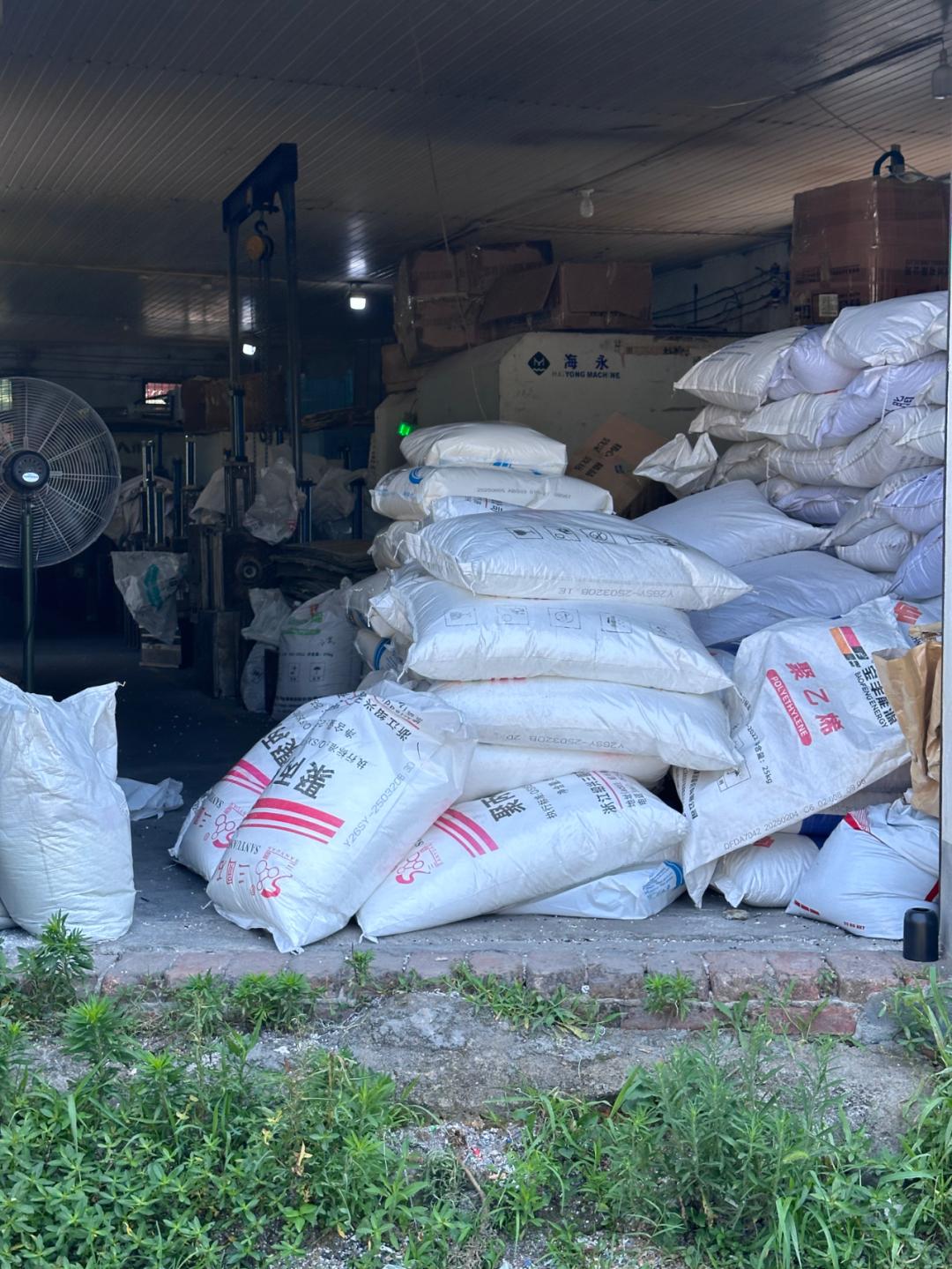
Faced with volatile prices, business owners, usually busy with production, felt like stock market investors.
Sheng Jiayi, head of Deqing Shengtiān Garments, runs a scarf factory. What bothered her most wasn’t the high prices but the instability. In the past, a quoted price would hold for at least half a month. Now, raw material prices changed daily. She held a meeting with her staff, requiring salespeople to check real-time prices before quoting customers – a tedious process.
Yang Zhiheng agreed. “Even if prices rise, at least rise steadily.” Prices were going up and down, and he worried that if prices later fell, he would be stuck with expensive raw materials and wouldn’t be able to sell his high-priced goods.
Self-Rescue in the Squeeze
When erratic raw material prices became a daily reality for all factories, the real test began. They could neither fully pass costs upstream nor easily shift them downstream. On this taut transmission chain, each factory had to “tough it out” in its own way.
In mid-to-late March, Xu Qianhui, head of Baifeng Cashmere, received a message from her packaging material supplier, warning that plastic bags might go up in price and suggesting she stock up before the adjustment. “They would say, ‘It might go up tomorrow or the day after. Do you want to buy a batch today?’” Xu recalled. These bags had a low unit price – “a few cents each” – so even a rise had limited impact on overall costs. Still, she chose to stock up a bit to reduce uncertainty.
Some factory owners chose to stockpile core raw materials. Both Zhang Jue and Mu Longsheng, when PP prices rose to over 8.000 yuan per ton, made the same decision: to stock up 15 to 20 days’ worth of production in advance. “Because we expected prices to go even higher,” Mu said. His warehouse was packed with 800–900 tons of raw materials. But that was the limit – constrained by both cash flow and physical storage space. In essence, stockpiling exchanged future price risk for immediate cash flow pressure.
For smaller factories with tight cash flow, “shrinking” became the only viable self-defense. In Keqiao, Yang Zhiheng’s textile factory changed its order policy: “We now try to avoid doing orders when possible, or do as little as possible. Only accept orders with a deposit or from consumers who have already placed orders.” The increased cost was shared between the factory and the customer. For example, if costs rose by 0.4 yuan, the factory and customer each paid 0.2 yuan. Yang also heard that many small factories around had closed or given employees time off.
During the most frantic period of non-woven fabric price increases, several of Yu Shuhui’s suppliers had no stock or wouldn’t sell. She made a decisive choice: notify customers that she was suspending supply of products requiring non-woven fabric. The machines in her factory stopped, and workers were reassigned to other product lines.
When internal absorption reached its limit, trying to raise prices became the last resort. However, this path was full of obstacles.
In late March, Yu Shuhui and Mu Longsheng sent price increase notices to customers, with increases of 15% to 20%. But this was far from a victory. Even after raising prices, they couldn’t fully cover their costs, barely breaking even. Yu said, “We’re really gritting our teeth on these sales. We even told some customers, ‘Please order less, wait until prices come back down.’”
Mu Longsheng admitted that they were either barely losing money or just breaking even.
Zhang Jue’s factory sells mainly through e-commerce platforms, which control prices, so raising prices was impossible. Instead, he used profits from higher-margin design- or patent-protected products to subsidize basic, low-priced, high-volume items. Take the most ordinary plastic box: his factory used about two tons of material daily to produce 10.000 boxes. A set of four boxes sold for 5.9 yuan. Before the raw material price hike, the profit was 0.4 yuan. “If raw material prices go up even a little, we lose money.” Only a few exclusive products had a 50% gross margin, still leaving some profit.
These manufacturers’ “toughing it out” acted like temporary dams, preventing the cost surge from directly flooding consumer markets. Yet the pressure didn’t disappear. It had materially changed the “fundamentals” of goods manufacturing and translated into “invisible bills” that had not yet reached consumers.
The ‘Invisible Bill’ That Reaches Everyday Life
While Zhang Jue was worrying over PP quotes, the cost structures of the plastic boxes he made, the toothbrushes Mu Longsheng produced, and the cashmere sweaters Xu Qianhui packaged had quietly been rewritten. From crude oil to store shelves, every link in the chain was tightening – though the speed and form of reaching consumers varied.
When you wake up in the morning and pick up your toothbrush, the handle is made of PP – whose prices, as noted, have soared. In March, multiple global chemical companies announced price hikes. US chemical giant Dow doubled its previously announced polyethylene price increase. The bristles, depending on whether imported or domestic, also rose – the imported bristles used in Mu’s factory had gone up due to international freight costs. In Mu’s ledger, the fully allocated cost of an ordinary toothbrush had quietly climbed from 2 yuan to 2.4 yuan.
After brushing, you apply toner, lotion, and sunscreen. Whether it’s the surfactants responsible for cleaning and emulsifying in your face wash, or the esters and silicone oils that determine texture in your skincare, or the various solvents for dissolving and stabilizing formulas, as well as thickeners and film-formers – most come from downstream derivatives of crude oil.
According to ChemNet data, over the seven days ending April 9. the prices of many basic chemical raw materials, including methylpropanediol, acetic acid, methyltrichlorosilane, and n-propanol, rose by more than 10%. Among them, methylpropanediol – often used in skincare as a solvent and humectant, helping active ingredients penetrate the skin and also contributing to hydration and texture – rose by 18.67% in seven days. It is widely used in creams, hand lotions, and other products.
Next, before going out, you put on a black outdoor jacket. The outer shell is often high-strength, abrasion-resistant nylon, and the lining uses wrinkle-resistant, shrink-resistant polyester staple fiber. These synthetic fibers are also derived from crude oil through multiple stages of extraction, separation, reaction, synthesis, and processing.
According to CCTV Finance, one major type of polyester product – polyester filament – rose from about 7.180 yuan per ton to 9.300 yuan per ton in March. Multiple varieties of nylon saw weekly gains of over 6%, with some grades jumping 2.000 yuan per ton in a single day.
Later, at noon, you order takeout. The container, spoon, insulating bag – all are made of plastics that are rising in price. In the evening, you open a delivery package. The price of gasoline and diesel has gone up, so the shipping cost for the package to reach you has also increased.
Zhang Jue’s factory is in Yiwu, where an average of over 30 million packages are sent daily from this small-commodities capital to all over the country. March is usually a slow season, but this year, the cost per package didn’t drop – it rose by more than 0.2 yuan per parcel.
For Xu Qianhui, the cashmere she ships overseas is high-value goods, relying on air freight. The fuel surcharge for international couriers is closely tied to crude oil prices. In April, the surcharge changed from monthly to weekly adjustments, and DHL’s rate skyrocketed from 39% to 46% in just two weeks. This directly increased the shipping cost of every product crossing the ocean by several percentage points.
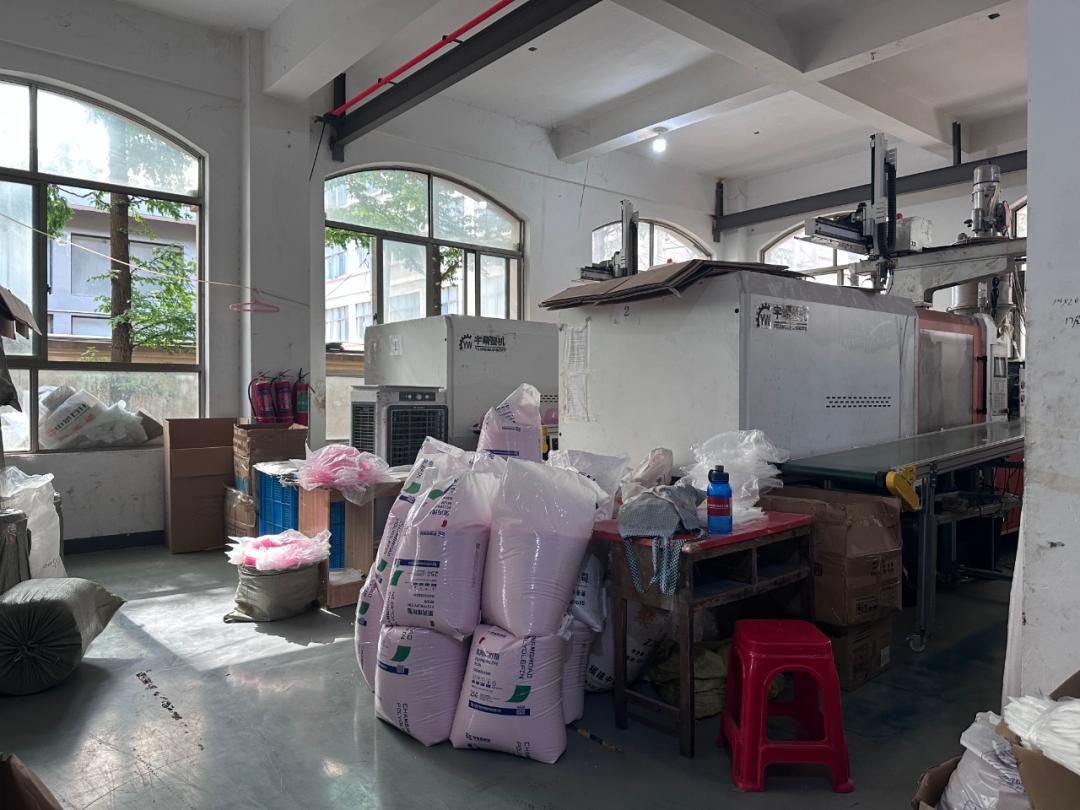
This “invisible bill” – covering clothing, food, housing, transportation, and spanning local and global – is steadily adding up. Yet as end consumers, we haven’t yet seen noticeable jumps when scanning our payment codes. Behind this lies the immense Chinese manufacturing system, acting as the ultimate “buffer.”
“Think of it like cooking,” Jiang Lin explained. “Tomato scrambled eggs – if the price of scallions goes up, the dish’s price doesn’t necessarily go up right away.” In the fiercely competitive beauty and personal care market, most brands first choose to compress their own profit margins or adjust marketing budgets to absorb the sudden cost increase internally.
But basic, high-frequency consumer goods – like washbasins, plastic containers, water bottles – have no process barriers, intense competition, and razor-thin profits. Their cost structures have almost no room for optimization. Any increase in raw material prices means the factory produces at a loss.
Another reason consumer prices appear stable is the production lead time. Products appearing in front of consumers in March were often ordered from factories back in February. Yu Shuhui’s factory had 10% of its orders placed at the end of February, just before prices rose. Mu Longsheng had signed a large order with JD.com just days before the war began. For those orders, factories couldn’t raise prices, so they had to grit their teeth, buy high-priced raw materials, and produce at a loss. “For the JD.com order alone, we lost at least 8%.”
The Long Aftermath
But the physical law of cost cannot be invalidated; it is merely transformed. When overt price increases are blocked by intense market competition and consumer sensitivity, the pressure seeks hidden exits.
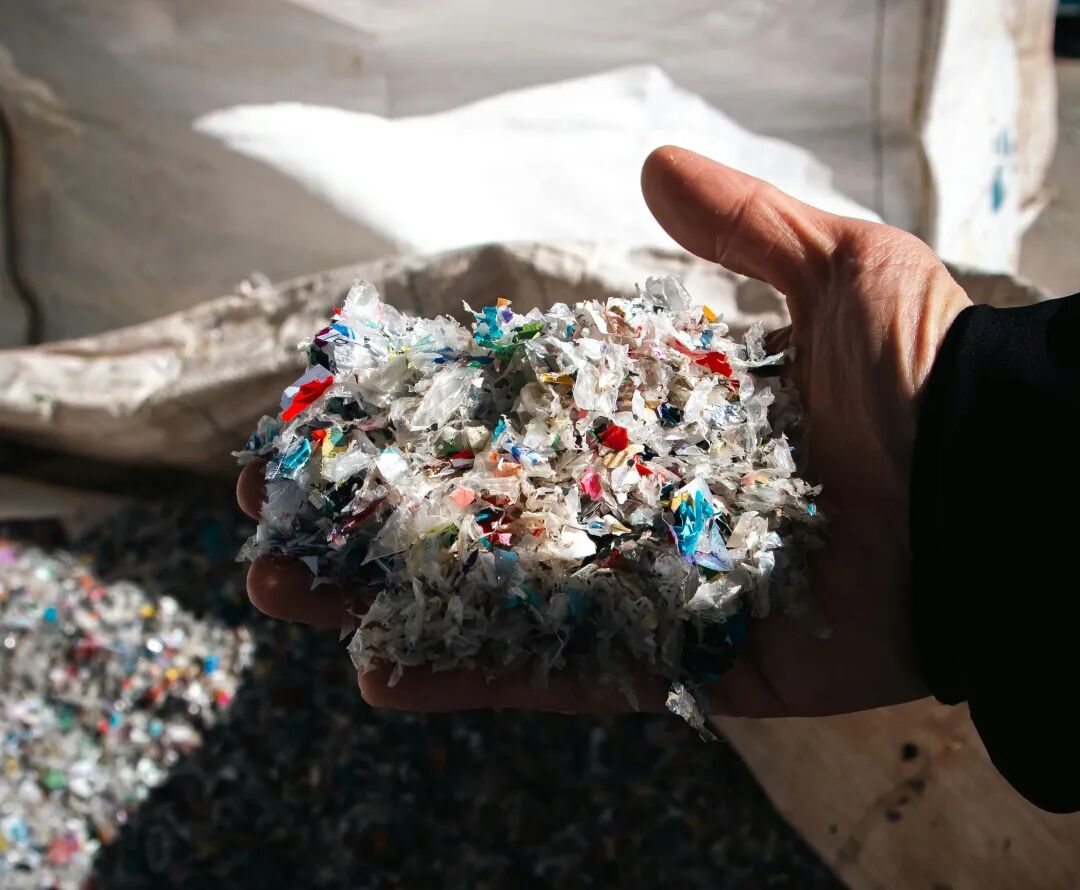
“As raw material prices rose, recycled material prices also rose by 30%. Many people are turning to recycled materials to fill market gaps,” Zhang Jue observed. “Recycled material” refers to secondary raw materials made by dissolving defective or waste plastic – they have a strong odor and inconsistent quality.
One source revealed that his factory, which mainly produces mid-to-high-end products, normally sells its production waste as “recycled material” to smaller factories making lower-end products. Recently, he has felt greater demand for recycled material.
This hints at a troubling trend: part of the cost that cannot be reflected on price tags may be quietly translating into a potential decline in product quality. For smaller factories with limited financial and technical strength, caught between “raising prices means death” and “sustaining losses,” using cheaper “recycled material” or downgrading material grades becomes a desperate survival strategy.
This hidden “downgrade” is hard for consumers to notice in the short term, but over time it can erode brand reputation and industry health.
When news of the US-Iran ceasefire came, the waiting factories reacted differently.
Sheng Jiayi was watching raw material prices, hoping to stock up when prices fell.
Yu Shuhui was busy all day and only heard the news from others in the afternoon. “Of course, it’s good news.”
Many others shared Yang Zhiheng’s thoughts. Though prices had fallen, he worried they might quickly drop to another low. “If I place an order now, I’ll lose a fortune.”
There was little joy. The month’s losses were hard to estimate, and it might take a long time to recover.
Zhang Jue did the math: over the past ten days, his factory had lost an average of 30.000 yuan per day. Many other factories, like Mu Longsheng and Yu Shuhui, hadn’t even had time to calculate. “First, we have to use up all that expensive raw material. Second, we need to wait for oil prices to stabilize. It’ll take at least two or three months to gradually even out and figure out exactly how much we lost.”
Sheng Jiayi also worried that, beyond synthetic materials, natural material prices might be forced up too. “If polyester gets more expensive, people might think they might as well pay a little more for natural materials.”
For the beauty and skincare industry, April sees rising temperatures and UV intensity – the peak season for sunscreen production and stocking. Sunscreens rely on film-formers, solvents, and some active ingredients that also come from petrochemical raw materials. Facing raw material price shocks just before the peak season is a major headache.
The day before the US-Iran talks were announced (April 7), Mu Longsheng’s factory ran out of stockpiled materials. Despite record-high raw material prices, he had to order 80 tons for about 900.000+ yuan. “So we bought at the peak again yesterday. Based on today’s (April 8) crude oil price drop, we lost over 100.000 yuan in one day.”
Still, his mindset didn’t fluctuate much. “Order when needed – we have to use it anyway. Who knows? Maybe tonight they’ll say the talks broke down.”
Behind this “numbness” is a collapse of trust after repeated market lessons. Mu’s factory used to focus on export orders. Last year, the trade war made US business impossible. He barely survived by finding big domestic clients. Then the war broke out at the start of this year, sending raw material prices on a rollercoaster. “That US president says one thing and does another,” he said angrily. “It feels like he’s drawing his own K-line chart.”
Sheng Jiayi felt no joy, only exhaustion. “I’ve given up.” The situation was changing too fast for her to predict. “Who knows? Even if we stop fighting Iran, maybe we’ll start somewhere else.”
And sure enough, on the morning of April 9. Zhang Jue, Mu Longsheng, Sheng Jiayi, and others saw the unsurprising news pop up on their phones: the Strait of Hormuz was closed again.
The strait’s “on-off switch,” the rise and fall of oil prices, the talking and fighting of wars – for manufacturing businesses far away in the East, these remain variables hanging over their heads, forever beyond their control.
No one knows if this is the last “closure.” The only certainty is that this energy crisis – deeply embedded in the global supply chain – and the fire of costs it has ignited, continues to affect our daily lives in visible and invisible ways.
This article was originally published on WeChat public account “Mirror Workshop” by Mirror Workshop.
The views expressed are solely those of the author. This platform provides only information storage space.